


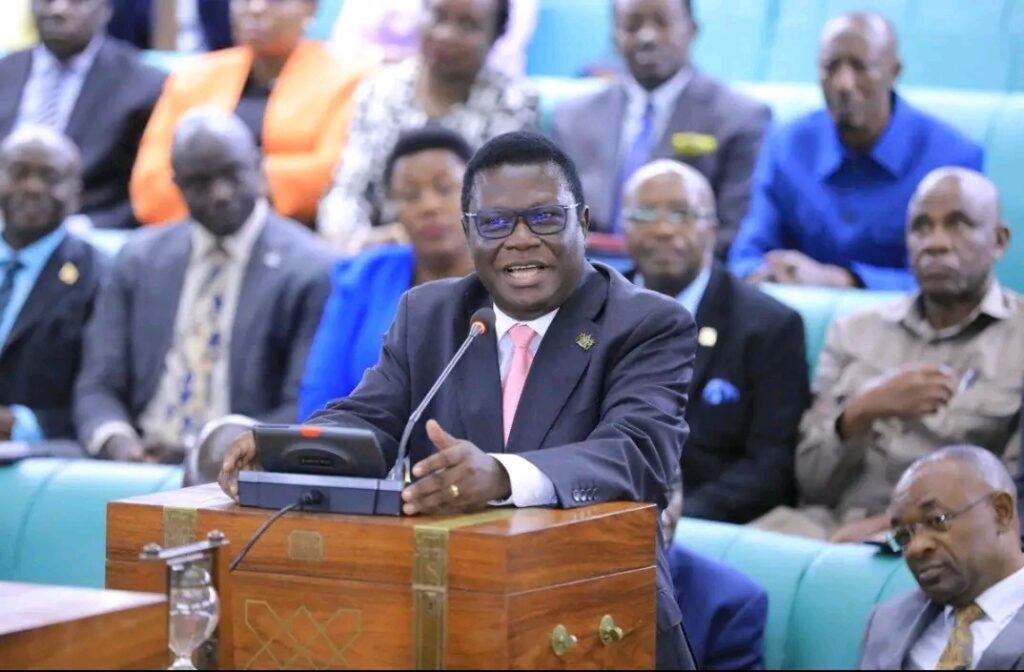
Uganda’s Minister for Justice and Constitutional Affairs, Norbert Mao, has petitioned the Clerk to Parliament to postpone the induction of Members of the 12th Parliament until after the election of the Speaker and Deputy Speaker.
In a letter dated April 27, 2026, Mao argues that while induction is vital for equipping legislators with knowledge on lawmaking, ethics, and parliamentary procedures, the current timeline risks turning the exercise into a politically charged process.
Mao, who is also MP-elect for Laroo-Pece and president of the Democratic Party, is contesting for the Speakership against incumbent Anita Among. He warns that conducting induction before leadership elections could distract MPs, especially with nearly two-thirds of the incoming legislators being first-timers.
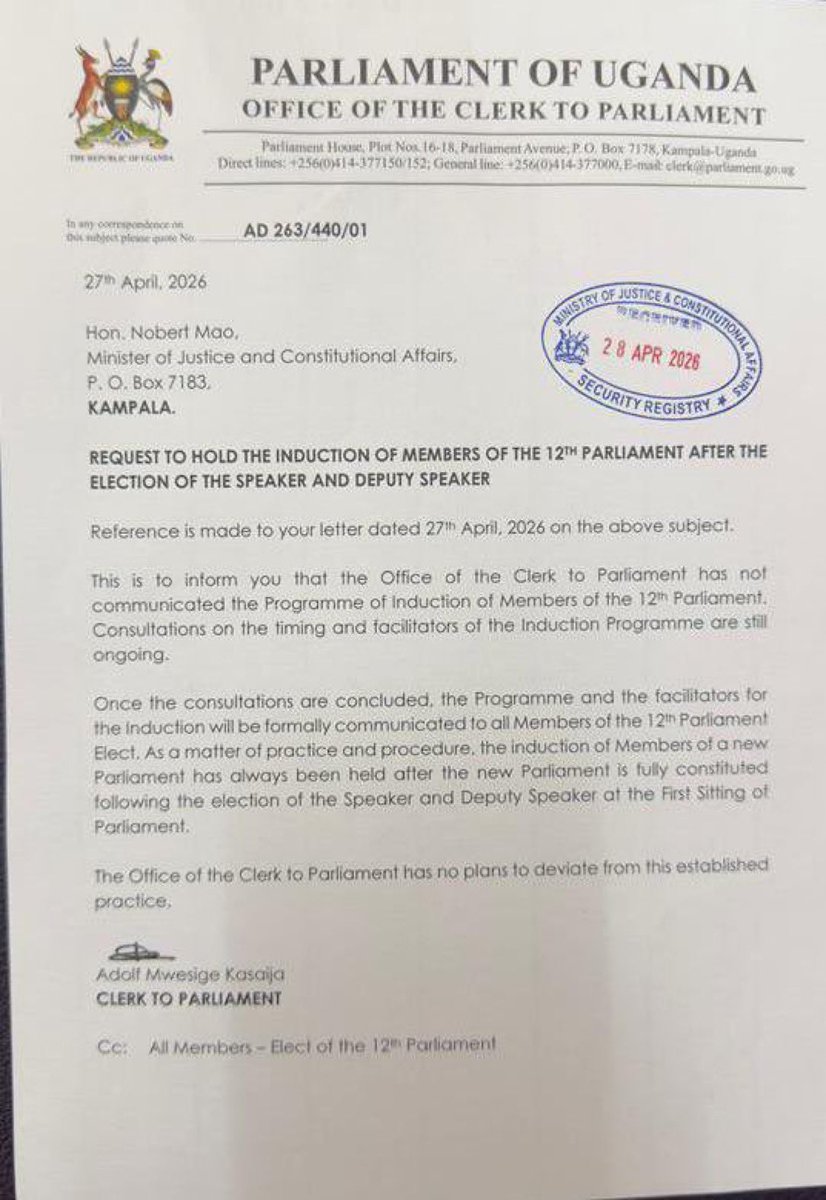

“To take members through an induction before determining the leadership of Parliament is like taking a sports team to training before choosing its captain,” Mao noted.
He raised concerns about alleged bias in the planned program, claiming the selection of facilitators appears influenced by the outgoing Speaker’s camp. According to Mao, this could turn what should be a neutral training into a platform for political mobilisation.
He also referenced past experiences at the Kyankwanzi retreat, where he said dissenting voices were sidelined, pointing to what he described as a pattern of controlling narratives within parliamentary engagements.
Beyond the immediate dispute, Mao proposed the revival of an independent Institute of Parliamentary Studies to handle MPs’ training. He said a similar initiative, once proposed in honor of former Speaker Rebecca Kadaga, was abandoned due to political disagreements something he described as short-sighted.
Mao maintains that Parliament is only fully constituted after electing its Speaker and Deputy Speaker, making it more appropriate for induction to follow that process. He insists his proposal is aimed at protecting the integrity and effectiveness of the orientation program.

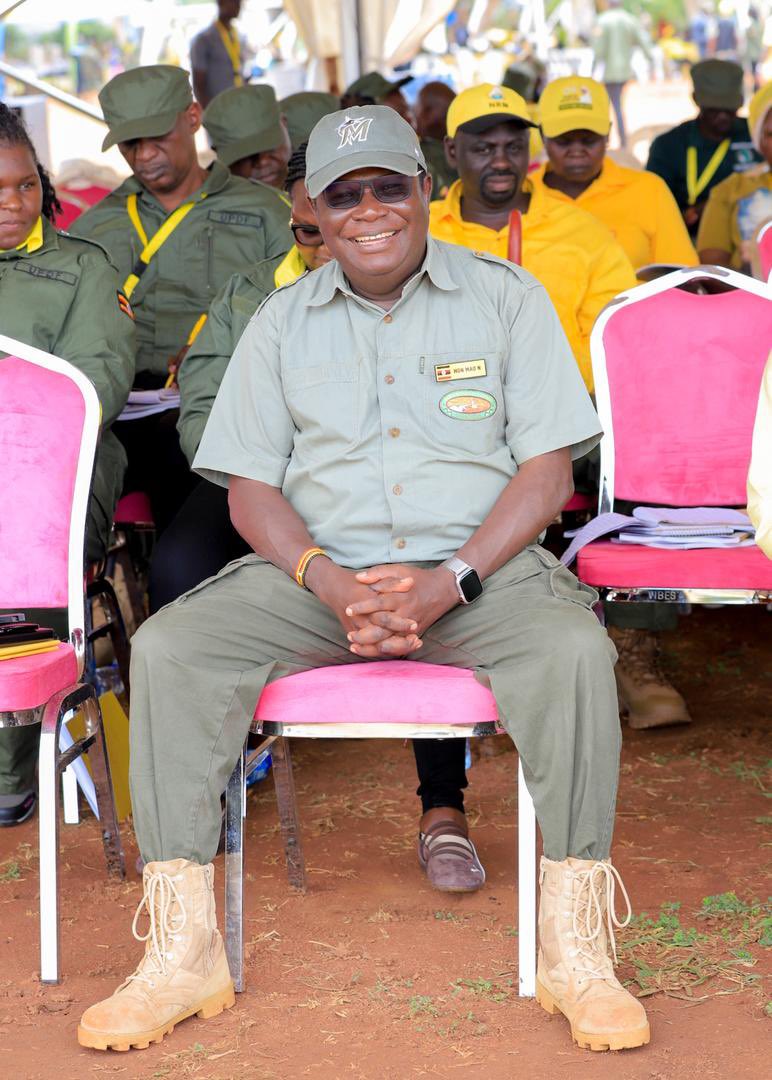
The move comes amid intensified political maneuvering ahead of the Speaker race, with the sequencing of key parliamentary processes now emerging as a critical point of contention.