


Uganda’s economy is riding a wave of strength, and at the center of it all is a stunning milestone, the Uganda Shilling has been named the world’s most stable currency, beating heavyweights like the U.S. Dollar, UK Pound Sterling and Hong Kong Dollar.
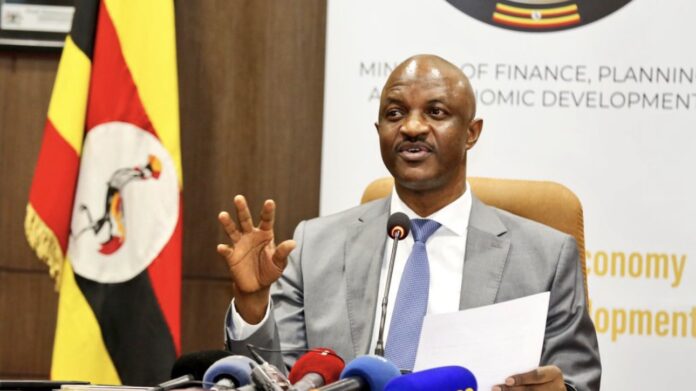
Revealing the figures during a third-quarter budget performance briefing in Kampala, Ramathan Ggoobi, Permanent Secretary and Secretary to the Treasury, said the shilling appreciated by 2.45% in the year ending December 2025, driven by low inflation, disciplined government spending and strategic interventions in food and fuel markets.
“Currently, the Uganda Shilling is the most stable currency in the world, followed by the UK Pound Sterling and the Hong Kong Dollar,” Ggoobi announced.
Uganda’s economic performance remains robust despite global volatility and election-year pressures. GDP growth hit 6.3% in FY2024/25 and is projected to rise to between 6.5% and 7% this financial year, with expectations of double-digit growth in the medium term.
As a result, Uganda’s economy is projected to expand to $68.4 billion (Shs 249.4 trillion) in FY2025/26, underscoring the country’s growing financial resilience.
Even more striking, headline inflation held steady at 3.1% in November and December 2025 — an unusual trend during an election year, when prices typically surge.
“Uganda has registered Africa’s lowest inflation rate over the past decade,” Ggoobi noted, attributing price stability to government investment in food production, sound monetary policy, and direct fuel imports through the Uganda National Oil Company, shielding local markets from global oil shocks.
The shilling’s performance has further been supported by tight government expenditure controls while fully funding election-related activities, security operations, and key sectors including health, education, wealth creation and infrastructure.
Backing the government’s assessment, NSSF Managing Director Patrick Ayota previously highlighted the shilling’s strong appreciation against the U.S. dollar over the past five years as evidence of Uganda’s solid economic fundamentals and investor-friendly financial environment.
“If you came into Uganda five years ago with $10,000, exchanged it into shillings and converted it back today, you would have $695 more than when you started,” Ayota revealed.
He credited the stability to a free-floating exchange rate, absence of foreign exchange controls, and investor confidence in Uganda’s long-term economic direction.
While major African currencies like the Egyptian Pound and South African Rand have suffered sharp declines against the dollar, Uganda’s Shilling continues to stand tall, positioning the country as a rare beacon of currency stability on the continent.
Uganda’s economy is not just surviving — it’s thriving. And the Shilling is leading the charge.