



The Uganda Revenue Authority (URA) has moved to calm public concern following an internal memo restricting the importation and customs clearance of Starlink equipment, insisting the requirement for security clearance is neither new nor unique to Uganda.
The directive, which comes as the country heads toward the 2026 general elections, orders that all Starlink technology gadgets, communication equipment and related components must be cleared by security before entering the country.
According to the memo, any import declaration for the listed items must be accompanied by a clearance or authorization letter from the Chief of Defence Forces (CDF) of the Uganda People’s Defence Forces (UPDF).
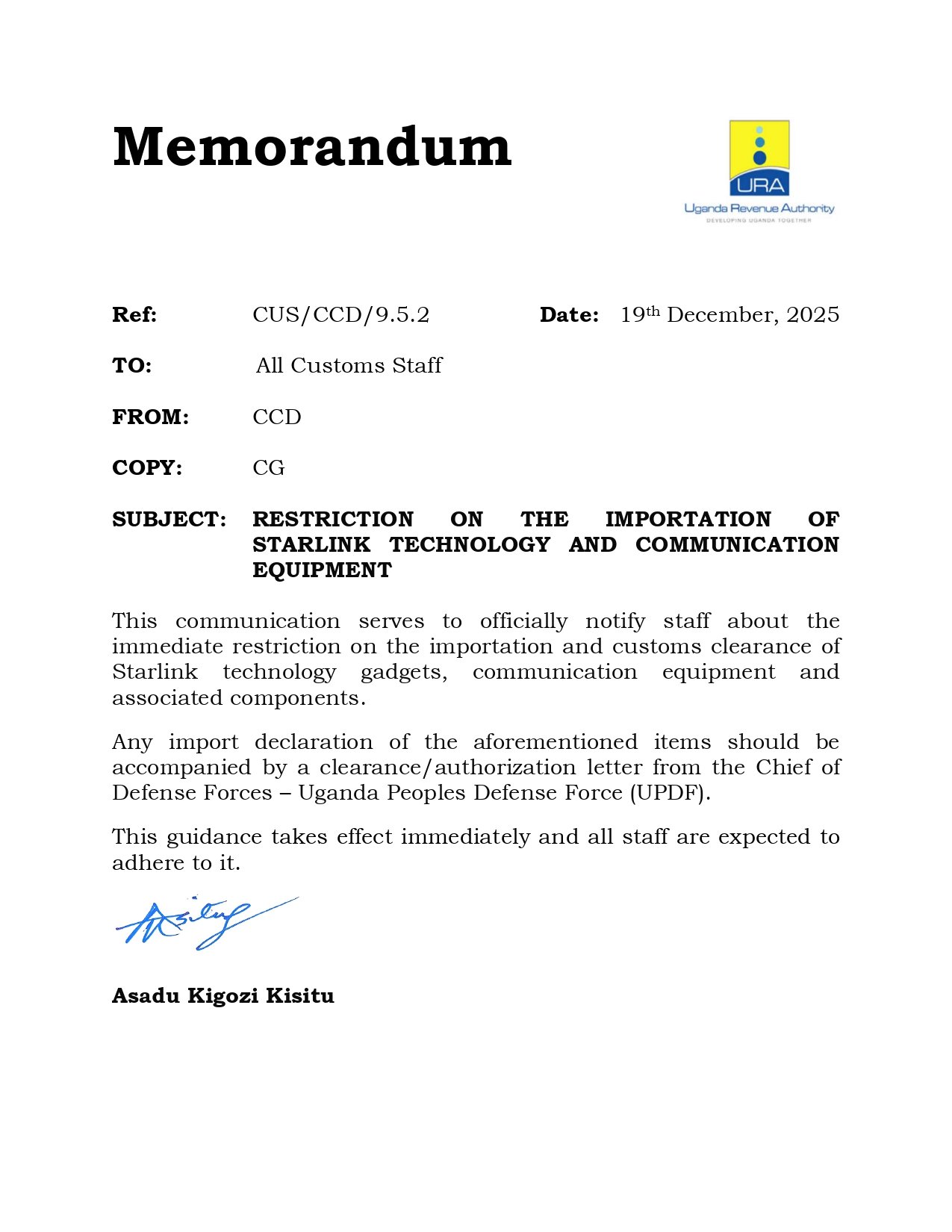

“Any import declaration of the aforementioned items should be accompanied by a clearance/authorization letter from the Chief of Defence Forces – Uganda Peoples Defence Force (UPDF). This guidance takes effect immediately and all staff are expected to adhere to it,” the memo states.
The move quickly sparked debate, with sections of the public linking it to fears of tighter control over communication and information flow ahead of the elections.
However, URA has dismissed those claims, saying the directive has been misunderstood.
Addressing the matter on social media, URA Assistant Commissioner for Public and Corporate Affairs, Robert Kalumba, said security clearance for sensitive communication equipment is a standard global practice.
“There is nothing new about requesting security clearance and government licensing for these entities, It’s not only Uganda that asks for security clearance. It’s a worldwide practice done by many countries. Let’s not create a storm in a teacup.”,Kalumba said.
Kalumba explained that communication technologies considered sensitive are globally regulated through strict licensing systems, product certifications and security vetting by customs authorities and other government agencies.
He added that such measures are meant to safeguard national security by ensuring advanced communication tools are not misused or accessed by unauthorized actors.
URA also pointed to international examples to back its position. In Italy, the proposed use of Starlink for government and military communications has faced intense scrutiny, with authorities insisting on strict national security clearance. The discussions have reportedly stalled due to security concerns, political debates around Starlink’s ownership, and pressure to adopt European alternatives such as the IRIS² satellite system.
Kalumba further noted that several countries, including India, Pakistan, South Africa, Senegal, Vietnam and the Democratic Republic of Congo, require security clearance before approving the rollout or importation of Starlink services.
According to URA, Uganda’s policy is in line with these international practices, stressing that security clearance is a normal requirement in many jurisdictions where Starlink technology is licensed and regulated.